
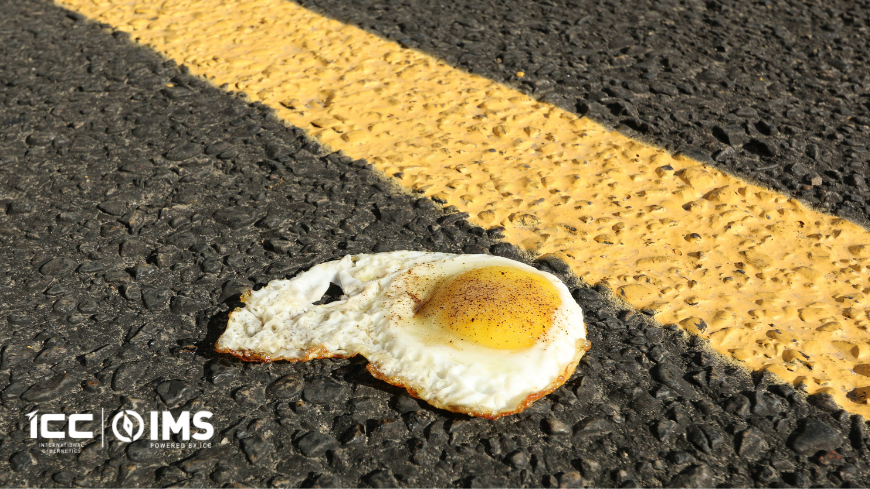
As temperatures rise, so does stress on our roadways. Excessive heat can soften asphalt, accelerate rutting and cracking, and contribute to surface deformation, especially on heavily traveled roads. All of this can lead to costly repairs down the road.
Pro Tip: You don’t have to wait until the damage becomes visible to do something about it. And some of the most important damage isn’t visible at all.
At ICC-IMS, we help agencies proactively monitor pavement conditions with advanced pavement condition surveys and structural testing. Every inch of pavement is scrutinized for surface distresses such as alligator cracking, longitudinal and transverse cracking, rutting, and raveling. But the substructure of a road, the part you can’t see, is the single most significant factor in how long that pavement lasts. That’s where structural testing comes in.
Not all alligator cracking means the road has structurally failed. Heat-aged, brittle binder can crack at the surface while the structure underneath is still sound, which may call for a simple resurfacing instead of a full rebuild. Structural testing tells the difference, so your budget goes toward the treatment the road actually needs.
With our Traffic Speed Deflection Device (TSDD), delivered in partnership with Geosolve , we capture continuous structural data at normal traffic speeds, with no lane closures and no traffic control required. Safer for crews and drivers, and comprehensive enough to catch the localized soft spots that point testing can miss.
Interested in our new structural testing capabilities? Get in touch. We can help keep your roads performing at their best, no matter how high the temperature rises.